MBBS Admission in Russia 2026 for Indian Students: Fees, Universities, Eligibility and NMC Rules
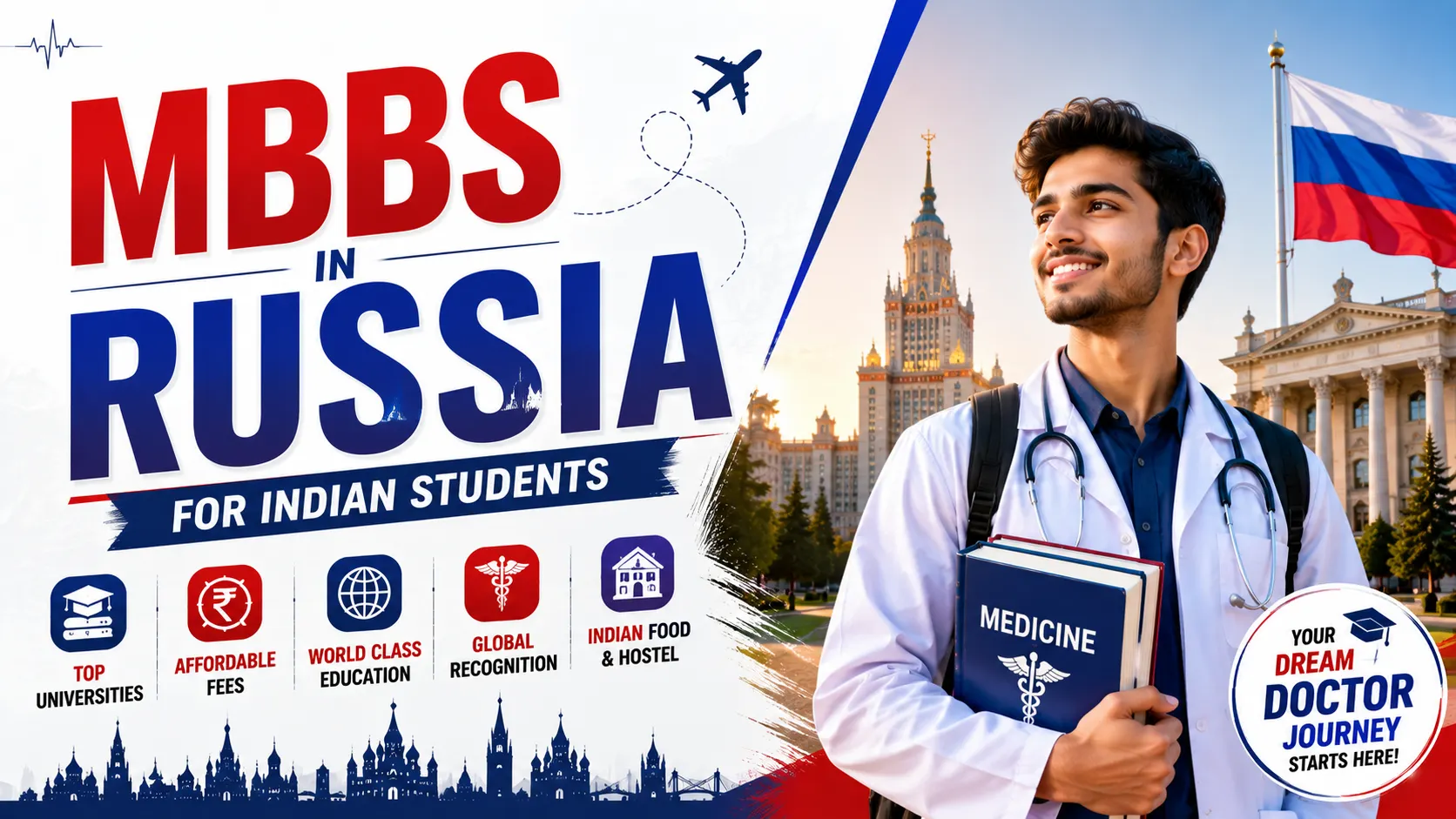
MBBS in Russia for Indian students can be a practical option in 2026 for NEET-qualified candidates seeking wider university choice and a complete budget commonly around ₹35–60 lakh. Russia normally offers six-year General Medicine programmes, but students must verify the exact curriculum, internship, English delivery, clinical hospitals and Russian medical-licensing pathway before admission.
The programme commonly called “MBBS in Russia” in India is generally an undergraduate General Medicine Specialist programme. The degree name may not literally be “MBBS,” so candidates should obtain the exact programme title, qualification, transcript format and internship documents in writing.
Written and researched by: Dr. Shikha Mudgal, PhD awarded by AIIMS Rishikesh
Verification method: NMC regulations, NBEMS results, Indian Embassy guidance, Russian government information and current programme documents assessed separately
Partner source pool: Relevant Rus Education partner universities considered alongside independent evidence
Last reviewed: 29 July 2026
Verification method: NMC regulations, NBEMS results, Indian Embassy guidance, Russian government information and current programme documents assessed separately
Partner source pool: Relevant Rus Education partner universities considered alongside independent evidence
Last reviewed: 29 July 2026
Editorial note: This page provides medical-education and admission guidance, not clinical medical advice. Programme conditions, fees, accreditation, admission availability and regulations may change.
MBBS in Russia 2026: Quick Answer
Russia’s undergraduate General Medicine programme normally takes six years across twelve semesters. Selected universities teach international students in English, but Russian is required for patient interaction, practical training and the local accreditation pathway.
Is MBBS in Russia Right for You?
MBBS in Russia may suit a disciplined student who has qualified NEET, can fund the complete programme, is willing to learn Russian and understands that a foreign degree does not automatically provide Indian medical registration.
Direct Verdict
Russia is not automatically the right choice merely because it offers more universities or comparatively affordable regional options.
It becomes suitable only when the student finds a specific programme that meets academic, clinical, financial and licensing requirements.
Why Indian Students Consider MBBS in Russia
Indian students consider Russia because it offers multiple medical universities, regional and premium fee categories, established public institutions and selected English-medium programmes.
What Russia Does Not Guarantee
Admission to a Russian medical university does not guarantee:
- NMC compliance
- Strong clinical exposure
- Full English delivery
- Russian medical registration
- FMGE qualification
- Indian internship placement
- Permanent registration in India
- Stable fees for six years
- Suitable hostel conditions
- Safe university transfer
Critical Advisory Before Choosing Russia
The Embassy of India in Moscow advises Indian students considering Russian medical education to understand NMC requirements and confirm programme compliance with the institution before admission. The Embassy guidance should not be interpreted as approval of every Russian university.
Before applying, confirm:
- Current admission availability
- Exact General Medicine programme
- Six-year academic duration
- Foreign internship or clerkship structure
- English teaching across all years
- Russian-language curriculum
- Teaching hospitals
- Current accreditation
- Russian licence eligibility
- Complete fees and refund conditions
Check Your MBBS in Russia Eligibility
Share your:
- NEET score and category
- Class 12 PCB marks
- Complete family budget
- Preferred Russian cities
- Hostel requirements
- Admission year
BoostMyTalent will help you compare relevant Rus Education partner universities, current programme evidence, complete costs, FMGE data and important NMC requirements.
Call or WhatsApp: 9090171704
- Course duration and qualification
- Internship and licensing
- Eligibility and NEET
- NMC rules
- English and Russian language
- Complete fees
- Selected universities
- FMGE trends
- Clinical exposure
- Admission process
- Visa and documents
- Hostel, food and safety
- Scholarships and loans
- Russia comparisons
- Return-to-India pathway
- Programme scorecard
- Final checklist
- FAQs
MBBS Course Duration in Russia
The undergraduate General Medicine programme in Russia normally lasts six years and contains twelve semesters. The Indian Embassy also describes a clinical rotation or clerkship component, but students must verify how the selected university documents this training and whether it satisfies the requirements applicable to them.
Is the Russian Degree Actually Called MBBS?
The qualification may be described as:
- General Medicine
- Specialist in General Medicine
- Physician
- Doctor or medical practitioner in local terminology
Before admission, obtain:
- Exact programme name
- Qualification awarded
- Programme code
- Curriculum
- Duration
- Clinical-training structure
- Internship documentation
- Diploma and transcript format
Is Internship Included in the Six-Year Programme?
The Embassy information describes clinical rotation or clerkship of twelve months or more during the programme. However, candidates should not assume that every university documents it identically or that a general statement proves FMGL compliance.
Ask the university to provide:
- Internship or clerkship title
- Start and end dates
- Rotation departments
- Supervising institution
- Assessment method
- Logbook format
- Certificate issued
- Transcript entry
- Link with Russian accreditation eligibility
Programme Reality
A six-year brochure is not sufficient by itself.
The student needs a document trail proving what was studied, where clinical training occurred and how the practical component was assessed.
MBBS in Russia Eligibility for Indian Students
Indian applicants generally need Class 12 with Physics, Chemistry, Biology or Biotechnology and English, NEET qualification, a valid passport and the selected university’s academic requirements.
Is NEET Compulsory for MBBS in Russia?
Indian citizens and OCI candidates intending to obtain a foreign primary medical qualification and later seek registration in India should qualify NEET.
NMC states that NEET qualification is treated as the eligibility certificate and that the result remains valid for three years from declaration for pursuing an MBBS or equivalent course abroad.
Can I Study MBBS in Russia with a Low NEET Score?
Yes, when the student has qualified under the applicable category and meets the university’s other conditions.
A low qualifying score does not prove:
- Programme quality
- NMC suitability
- Adequate clinical exposure
- Strong English delivery
- Russian licence eligibility
- Good FMGE preparation
- Financial suitability
For score-specific guidance, read:
Can I Study MBBS in Russia Without NEET?
A Russian university may admit a candidate under its local conditions, but this does not make the route suitable for an Indian student planning to return and seek medical registration.
Merely appearing for NEET is not enough. The official result should show the candidate as qualified.
Is IELTS Required?
IELTS or TOEFL is not universally required across Russian medical universities.
Selected institutions may use:
- English interview
- Biology assessment
- Chemistry assessment
- Russian-language assessment
- Academic-document evaluation
The exact process should be confirmed for the current intake.
NMC Rules for MBBS in Russia
A Russian medical programme should be evaluated under the Foreign Medical Graduate Licentiate Regulations and the latest NMC clarifications. NMC’s current regulations page includes the 2021 FMGL Regulations and updated Frequently Asked Questions.
Official sources:
What Is the 54+12 Requirement?
The applicable foreign pathway should include:
- At least 54 months of medical education
- At least 12 months of foreign internship
- Required institution and location continuity
- Mandatory medical subjects
- Clinical training
- English as the teaching medium
- Eligibility for local medical registration
Do not depend only on a statement such as “six-year MBBS.”
Does NMC Approve Russian Medical Universities?
No universal list of NMC-approved Russian medical universities exists.
NMC states that it does not endorse a list of foreign medical institutions and advises candidates to obtain fee, course-content, duration and internship information directly before admission.
Use:
Programme assessed against current NMC requirements
Avoid:
- NMC-approved Russian university
- NMC-certified university
- NMC-approved country
- Guaranteed valid degree
- Guaranteed FMGE qualification
- Guaranteed Indian registration
Is WDOMS Listing Enough?
No.
A directory entry does not independently prove:
- Current programme accreditation
- Compliance with NMC requirements
- Complete internship structure
- Clinical quality
- Russian licence eligibility
- FMGE success
- Future Indian registration
Russian Medical Licence Eligibility
The Indian Embassy states that a student may need to clear an accreditation examination conducted in Russian after the final examination to obtain a certificate allowing medical practice in Russia.
Before admission, ask:
- Can international graduates sit for the accreditation examination?
- What Russian-language level is required?
- Does the programme prepare foreign students for it?
- Is the clerkship recognised for this pathway?
- What certificate is issued after accreditation?
- Can the university provide the process in writing?
Why This Matters
NMC requires the foreign qualification to support enrolment or practice eligibility in the country where the qualification is awarded.
A degree alone should not be assumed to provide that eligibility.
English-Medium MBBS in Russia
Selected Russian universities offer General Medicine programmes for foreign students in English. However, Indian students still require Russian for patient history, clinical examinations, hospital communication and the local accreditation process.
Obtain Written Confirmation For
- Lectures
- Practical classes
- Laboratory teaching
- Internal examinations
- Clinical teaching
- Final examinations
- Clerkship or internship supervision
- Academic records
Ask Whether English Continues During
- All six academic years
- Hospital postings
- Bedside teaching
- Clinical examinations
- Final assessment
- Internship or clerkship
Why Russian Is Essential
Russian is needed for:
- Taking patient history
- Understanding complaints
- Explaining procedures
- Reading hospital records
- Communicating with nurses
- Presenting cases
- Clinical assessment
- Local accreditation
Language Verdict
A student unwilling to learn Russian should not select Russia merely because classroom teaching is advertised in English.
Medical education requires patient communication, not only English lectures.
MBBS in Russia Fees for Indian Students
A realistic complete budget for commonly considered Russian medical programmes is approximately ₹35–60 lakh. Regional universities may fall within this range, while premium programmes in Moscow or higher-fee institutions can cost significantly more.
These are editorial planning ranges, not university fee quotations.
Complete Cost Should Include
- Tuition for every year
- Hostel or accommodation
- Food
- Visa extension
- Migration registration
- Medical insurance
- Medical examinations
- Fingerprinting-related formalities
- Books and instruments
- Russian-language teaching
- Clinical transport
- Annual flights
- Internship expenses
- Degree documentation
- FMGE preparation
- Currency buffer
- Emergency reserve
Why Fees Vary
The final cost depends on:
- Moscow or regional location
- University category
- Programme language
- Hostel availability
- Payment currency
- Annual fee revision
- Travel route
- Living habits
- Internship expenses
- Banking restrictions
Is MBBS in Russia Possible Under ₹30 Lakh?
A complete six-year budget below ₹30 lakh is unlikely for most current options after including tuition, hostel, food, travel, visa, insurance and emergency costs.
A very low quotation may exclude:
- Hostel after the first year
- Food
- Annual flights
- Visa renewal
- Insurance
- Clinical expenses
- Internship
- Documentation
- Currency movement
For a complete fee analysis, read:
Selected Russian Medical Universities for Indian Students
The following institutions are included because they are relevant within the Rus Education partner network, have substantial Indian interest and have usable NBEMS outcome data.
They are not an NMC-approved list, final ranking or admission guarantee.
University Evidence Status Summary
Perm State Medical University’s official website confirms the training of foreign students, but current English delivery, fees, internship and clinical arrangements still require programme-specific documents. (psma.ru)
Orenburg State Medical University Evidence Review
Orenburg’s FMGE result remained comparatively strong across the 2024 report and December 2025 session, but the examination data does not independently verify programme quality, licensing eligibility or the current intake structure.
Smolensk State Medical University Evidence Review
Smolensk recorded a large candidate sample in both periods. The consistency is useful historical evidence, but it should not be treated as an admission recommendation by itself.
Mari State University Evidence Review
Mari had one of the largest Indian FMGE candidate samples among the selected universities. A large student population does not independently establish English quality or clinical participation.
Kemerovo State Medical University Evidence Review
Kemerovo’s candidate sample is smaller than Orenburg, Smolensk, Mari and Perm, so year-to-year percentage movement should be interpreted cautiously.
Perm State Medical University Evidence Review
Perm’s official site confirms foreign-student training. Its FMGE data provides a large historical sample, but the lower December 2025 rate should not be used alone to reject or accept the university.
Two-Year FMGE Trend of Selected Universities
How to Use This Table
Use the trend to ask better questions—not to make an automatic decision.
Check:
- Candidate sample size
- Changes across years
- Current curriculum
- Teaching language
- Clinical exposure
- Internship structure
- Academic support
- Student selection profile
FMGE Results for Russia
In the December 2025 FMGE session, 6,878 candidates with Russian qualifications appeared and 2,128 passed, producing a country-level pass percentage of 30.94%. The overall session pass percentage was 23.94%.
Is Russia’s FMGE Result Good?
Russia’s December 2025 result was above the overall session percentage.
It does not prove:
- Every Russian university performs equally
- Every programme meets NMC rules
- Future batches will obtain the same result
- A high university result guarantees individual success
- FMGE coaching replaces clinical education
Official sources:
Clinical Exposure in Russia
Clinical exposure depends on the exact university, teaching hospitals, patient volume, rotation structure, faculty supervision and the student’s Russian-language ability.
Evidence to Request
- Current teaching-hospital list
- Clinical affiliation documents
- Department rotation schedule
- Clinical hours
- Internship plan
- Student logbook
- Assessment policy
- Russian medical-language curriculum
Clinical Reality
A student with weak Russian may remain an observer rather than an active participant.
Russian-language preparation should begin from the first academic year.
MBBS in Russia Admission Process 2026
The admission process should begin with eligibility and programme verification—not by paying to reserve an undisclosed seat.
Russia’s official education portal states that foreign applicants may be admitted through entrance tests or education-document evaluation, depending on the university and admission route.
Admission Timeline
Exact dates differ by university.
Late Admission Risks
Avoid an offer requiring:
- Starting medicine online
- Missing several weeks of teaching
- Entering on a tourist visa
- Joining without confirmed accommodation
- Transferring later
- Completing subjects in India
- Paying before the university is identified
Documents Required for MBBS in Russia
Foreign applicants may require notarised Russian translations, recognition or legalisation of education documents depending on the university and admission route.
Common documents include:
- Class 10 marksheet and certificate
- Class 12 marksheet and certificate
- NEET scorecard
- Passport
- Passport photographs
- Birth certificate
- Medical fitness certificate
- HIV test report
- Other medical reports where required
- University application
- Admission offer
- Education contract
- Study invitation
- Visa application
- Notarised Russian translations
- Apostille or legalisation where required
Student Visa and Migration Requirements
Indian students generally need a university-issued invitation for a Russian study visa. After arrival, they must maintain their migration card, registration, medical documents and visa status.
Visa Process
- Receive verified admission.
- Obtain the university invitation.
- Apply for the study visa.
- Confirm visa details.
- Travel within permitted dates.
- Receive the migration card.
- Complete local registration.
- Renew visa and registration on time.
Immigration Mistakes to Avoid
- Entering on the wrong visa
- Losing the migration card
- Missing registration deadlines
- Allowing the visa to expire
- Changing hostel without updating registration
- Using unofficial immigration agents
- Handing over the original passport unnecessarily
Embassy Registration
Indian students should register with the Embassy of India’s student module and follow current Embassy and Ministry of External Affairs guidance.
Hostel, Food and Living Expenses
Living costs depend on the city, hostel, room sharing, food arrangement, transport and lifestyle.
Hostel Questions
- Is hostel available for all six years?
- Is it university owned?
- How many students share one room?
- Are electricity and heating included?
- Is internet included?
- Is there a kitchen?
- Is Indian food available?
- Is girls’ accommodation separate?
- Is a deposit required?
- Can the fee increase?
Food Options
Students may use:
- University cafeteria
- Indian mess
- Shared kitchen
- Local supermarket
- Restaurant food
Indian mess should not be assumed without written confirmation.
Winter Expenses
Budget separately for:
- Winter jacket
- Thermal clothing
- Waterproof footwear
- Gloves and head covering
- Bedding
- Heating-related hostel charges
- Medicines
- Personal care
Is Russia Safe for Indian Students?
No destination can be described as universally safe. Safety depends on the city, university, hostel, legal migration status, travel behaviour and current advisories.
Safety Checklist
- Controlled hostel access
- CCTV
- Separate girls’ accommodation
- Female warden
- Emergency contact
- Hospital transport
- Airport pickup
- Medical insurance
- Embassy registration
- Current student feedback
Practical Safety Rules
Students should:
- Carry valid identification
- Follow local laws
- Preserve migration documents
- Use official transport
- Avoid unauthorised employment
- Follow current travel advice
- Keep Embassy contacts
- Inform family before long travel
Scholarships, Quota and Education Loans
Russia’s government quota route is competitive and may provide tuition support, scholarship and dormitory access under applicable conditions. Admission under the quota is not automatic.
Do Not Count a Scholarship Until
- It is issued officially
- The amount is written
- The duration is stated
- Renewal conditions are clear
- Hostel support is confirmed
- The fee letter reflects the benefit
Education Loan Factors
Loan approval can depend on:
- University
- Programme
- Complete cost
- Co-applicant income
- Credit history
- Collateral
- Lender policy
- Repayment capacity
Calculate:
- Interest during study
- Moratorium
- Currency risk
- Margin money
- EMI
- FMGE preparation
- Indian internship living costs
Can Indian Students Work in Russia?
Russia’s official education portal states that eligible full-time foreign students at state-accredited universities may work during free time under applicable conditions. Medical students should not depend on part-time income to fund tuition or essential living expenses.
Russia vs Georgia vs Kazakhstan
Russia offers wider university and budget choice. Georgia provides comparatively clear English-programme information at selected universities. Kazakhstan may offer balanced Central Asian options.
For the complete comparison, read:
FMGE and Return-to-India Pathway
A Russian medical degree does not automatically allow medical practice in India.
General Pathway
- Complete the Russian programme.
- Complete the required foreign practical training.
- Obtain degree, transcript and internship records.
- Meet applicable Russian licensing conditions.
- Return with complete documentation.
- Apply for FMGE or the applicable examination.
- Qualify the examination.
- Obtain applicable provisional registration.
- Complete required internship or CRMI.
- Apply for permanent registration.
Preserve These Documents
- Academic calendar
- Curriculum
- Admission letter
- Education contract
- Fee receipts
- Visa records
- Migration cards
- Clinical logbooks
- Rotation certificates
- Internship certificate
- Degree
- Transcript
- Russian accreditation documents
- Medium-of-instruction evidence
BoostMyTalent Russia Programme Scorecard
This is an editorial decision tool. It is not an NMC, NBEMS, Russian-government or university rating.
Written evidence is required. Verbal statements and missing documents receive zero.
Scorecard Rules
- Current written evidence is mandatory.
- Verbal assurance receives zero.
- Old fee documents receive zero.
- Missing internship evidence receives zero.
- Scores must be refreshed for every intake.
- A high score does not replace regulatory review.
Automatic Rejection Conditions
Reject a programme when:
- NEET has not been qualified
- The university is hidden
- Programme duration is unclear
- Internship is promised elsewhere
- Accreditation cannot be verified
- Russian licence eligibility is unexplained
- Teaching hospitals cannot be identified
- Medical education is substantially online
- A future transfer is required
- Payment goes to an individual account
- Refund terms are absent
- Indian registration is guaranteed
Final MBBS in Russia Checklist
Before paying any amount, confirm:
- NEET qualification
- Class 12 eligibility
- Exact programme name
- Qualification title
- Six-year duration
- Twelve-semester structure
- Foreign internship or clerkship
- Institution continuity
- English-medium evidence
- Russian-language curriculum
- Teaching hospitals
- Clinical schedule
- Current accreditation
- Russian licence eligibility
- Current official fee letter
- Hostel and food charges
- Annual fee-increase terms
- Refund policy
- Official bank account
- Student-visa invitation
- Migration conditions
- Medical insurance
- FMGE trend reviewed
- Emergency reserve
- Indian registration pathway understood
Final Verdict
MBBS in Russia for Indian students can be a practical option in 2026 when the candidate:
- Has qualified NEET
- Meets Class 12 eligibility
- Can manage a complete budget of approximately ₹35–60 lakh
- Is willing to learn Russian
- Selects a documented six-year General Medicine programme
- Verifies clinical training and internship
- Understands Russian licence requirements
- Accepts the FMGE and Indian registration pathway
Russia’s biggest strength is wider university and budget choice.
Its biggest risks are:
- University-level variation
- Russian clinical-language requirements
- Unclear internship interpretation
- Local licensing requirements
- Currency and payment complications
- Climate adjustment
- Incomplete admission packages
Selected Rus Education partner-network institutions such as Orenburg State Medical University, Smolensk State Medical University, Mari State University, Kemerovo State Medical University and Perm State Medical University may be considered for profile-based comparison.
None should be selected only because it:
- Has a high one-year FMGE percentage
- Has many Indian students
- Appears in a directory
- Offers low tuition
- Is called NMC approved
- Promises easy admission
The correct university is one where the student can independently verify the programme, complete clinical training, obtain the required documents, pursue the Russian licensing pathway and lawfully continue towards medical registration in India.
Get Free MBBS in Russia Admission Guidance
Share your:
- NEET score and category
- Class 12 PCB marks
- Maximum family budget
- Preferred Russian universities
- Climate preference
- Hostel requirement
- Admission year
BoostMyTalent will help you compare relevant Rus Education partner universities, programme evidence, complete costs, FMGE trends, current admission conditions and important NMC checks.
Call or WhatsApp: 9090171704
FAQs on MBBS in Russia for Indian Students
Is Russia good for MBBS for Indian students?
Russia can be suitable for students seeking wider university choice and different budget levels. The exact programme, internship, hospitals, Russian language and licensing pathway must be verified.
What is the duration of MBBS in Russia?
The undergraduate General Medicine programme normally takes six years and twelve semesters.
Is the qualification called MBBS?
The programme is commonly called MBBS in India, but the final Russian qualification may be General Medicine, Specialist or Physician.
Is NEET compulsory?
Indian students planning to seek medical registration in India should qualify NEET before joining.
Can I study in Russia with a low NEET score?
Yes, when the candidate has qualified under the applicable category and meets the university’s other requirements.
Can I study in Russia without NEET?
A university may admit the student under local rules, but this can create serious problems for the intended Indian registration pathway.
How long is NEET valid?
NMC states that a qualifying NEET result remains valid for three years for pursuing an MBBS or equivalent programme abroad.
Is IELTS required?
IELTS is not universally compulsory. The selected university may use its own English or science assessment.
Is MBBS taught in English?
Selected programmes use English, but the exact medium across all academic and clinical years must be confirmed.
Is Russian compulsory?
Russian is essential for patient communication, clinical training and the local accreditation pathway.
What is the complete cost?
Commonly considered options require around ₹35–60 lakh. Premium programmes can cost more.
Is Russia possible under ₹30 lakh?
A complete six-year cost below ₹30 lakh is unlikely for most current options after living, travel and visa expenses are included.
Does tuition include hostel?
Not necessarily. Tuition, hostel, food and other expenses should be obtained separately in writing.
Which universities can be compared?
Selected examples include Orenburg, Smolensk, Mari, Kemerovo and Perm. Every programme needs current verification.
Which selected university had the highest December 2025 FMGE percentage?
Orenburg recorded 45.31%, followed by Smolensk at 43.26%, among the five examples compared.
Should FMGE percentage decide the university?
No. Use FMGE with sample size, clinical exposure, current curriculum, language and programme documentation.
What was Russia’s December 2025 FMGE result?
Russia recorded 6,878 candidates, 2,128 passes and a pass percentage of 30.94%.
Does NMC approve Russian universities?
NMC does not endorse a universal list of foreign medical universities.
Is WDOMS listing enough?
No. A directory entry does not prove current accreditation, NMC suitability or future registration eligibility.
What is the 54+12 requirement?
The applicable pathway should include at least 54 months of medical education and at least 12 months of foreign internship under required conditions.
Is internship included in six years?
Russian programmes may include clerkship or clinical rotation, but its duration and documentation must be verified for the exact university.
Is a Russian medical licence pathway required?
The candidate should establish eligibility for medical registration or practice in Russia. The accreditation pathway may require Russian-language competence.
Is Russia safe?
Safety depends on the city, university, hostel, migration compliance and student behaviour.
Is Russia safe for female students?
Families should verify girls’ accommodation, wardens, transport, access controls and current student feedback.
Is Indian food available?
Indian mess and self-cooking may be available at selected locations, but this should be confirmed.
How cold is Russia?
Climate varies by city. Several regions experience long, severe winters.
When does admission start?
Applications commonly open during the middle of the year, but exact medical admission dates differ by university.
Is there an entrance examination?
Selected institutions may assess biology, chemistry, English or Russian.
What documents are required?
Common documents include Class 10 and 12 records, NEET scorecard, passport, medical reports, admission documents and Russian translations.
How is the visa obtained?
The student generally requires verified admission and a university-issued invitation before applying for a study visa.
Can students work while studying?
Eligible full-time foreign students may work under applicable Russian rules, but medical students should not rely on this income.
Are scholarships available?
Government quota and selected institutional support may be available through competitive processes.
Can I get an education loan?
Loan eligibility depends on the university, co-applicant, collateral, credit profile and lender policy.
Is Russia better than Georgia?
Russia offers wider university and budget choice. Georgia may provide clearer English-programme information but commonly costs more.
Is Russia better than Kazakhstan?
Russia offers wider university choice. Kazakhstan may offer balanced moderate-cost options.
Is FMGE difficult after Russia?
FMGE can be challenging. Performance depends on curriculum coverage, clinical training, preparation and individual discipline.
How can BoostMyTalent help?
BoostMyTalent can compare relevant partner universities, current programme evidence, complete fees, FMGE trends, admission conditions and NMC-related checks.
Official Government and Regulatory Sources
- NBEMS FMGE Examination Page
- Official Study in Russia Portal
- Official Education in Russia Application Portal