Free Scholarship Help — Call 9090171704 Today

International School of Management Studies ISMS Pune
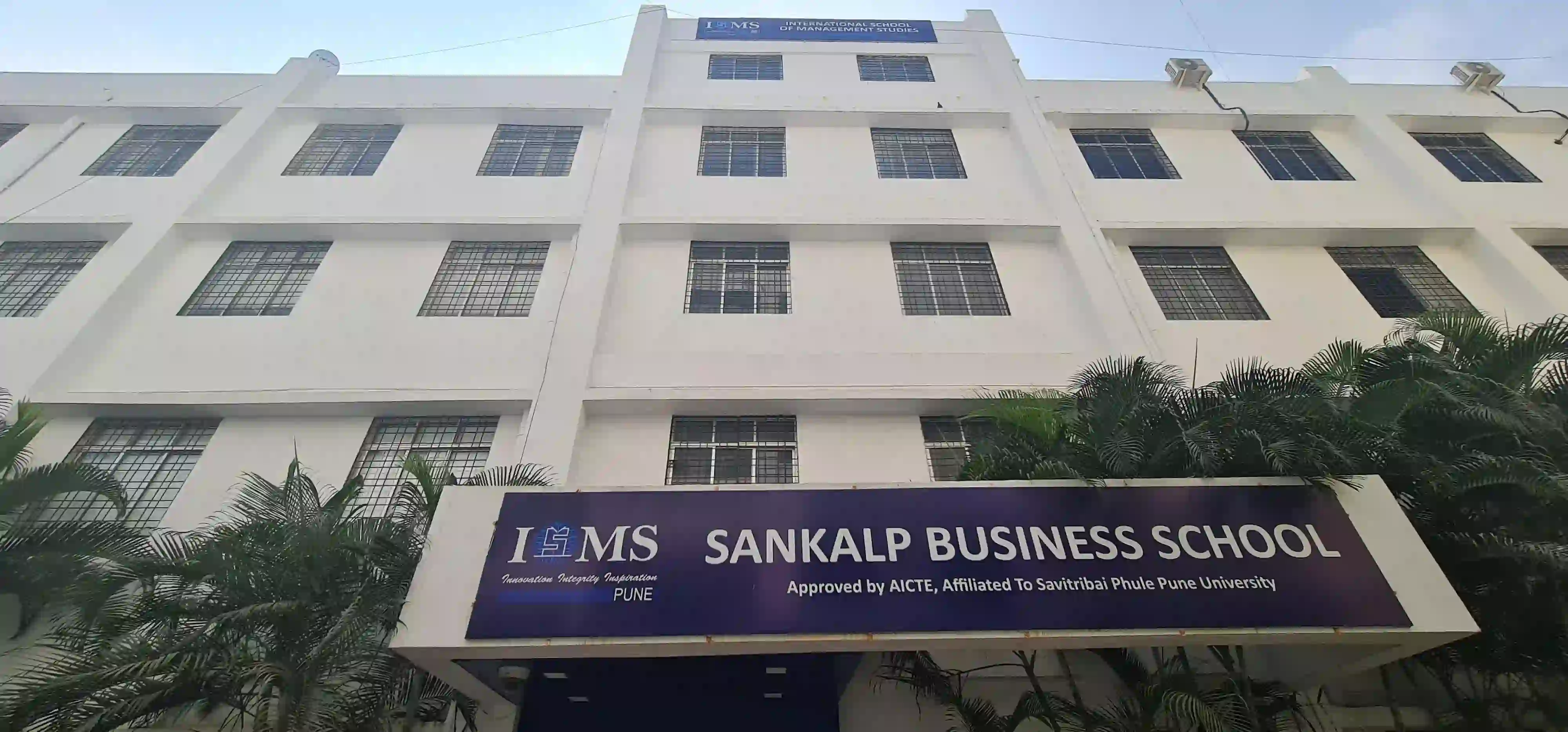

ISMS Pune Admission 2026: Fees, Placements, Scholarships & ROI

Private University
Boys, Girls
Estd 2010
Pune, Maharashtra
International School of Management Studies ISMS Pune - Quick Facts
ISMS was established in 2009 and operates through different management schools and international pathways. Its current placement dashboard reports an average package of INR 8 LPA, a highest package of INR 19 LPA and a 100% placement rate.
Quick Decision Snapshot
- Fees: Domestic programme fees are below several mid-premium Pune PGDM institutes.
- Admission: Selection uses graduation marks, entrance-test scores, screening and an interview.
- Placement: The INR 8 LPA average is more useful for planning than the INR 19 LPA highest package.
- Best For: Graduates seeking a practical MBA or PGDM with optional international exposure.
- Overall Value: More suitable for placement-focused profiles than research-led or low-attendance learners.
Overview
International School of Management Studies is mainly known for management programmes that combine an Indian MBA or PGDM pathway with practical training, professional certifications and optional international exposure. Its academic structure includes ISMS Sankalp Business School, ISMS TBS and international twinning programmes.
The domestic portfolio includes the PGP MBA and PGDM, while the International MBA and Sports Business Management programmes divide study between Pune and a UK university. Total domestic fees currently start at INR 7.35 Lakh, while overseas pathways require separate tuition in GBP.
The institute suits graduates who want internships, industry interaction, employability training and management specialisations without entering a premium-fee B-school. The 90% attendance requirement and additional overseas living costs make it less suitable for learners seeking a flexible or low-commitment programme.
Courses and Fees
ISMS Pune offers four active postgraduate management pathways. Domestic programmes use a fixed INR fee, while the two international programmes charge the Pune year in INR and the UK year in GBP.
MBA International
- Course Type: Degree
- Accepted Entrance Exams:
MBA International - Specialization |
|||
|---|---|---|---|
Specialization |
Eligibility |
Fees |
Explore |
| Supply Chain Management | 50% in Graduation + Entrance Exam Score | INR 16 Lakh |
|
| Finance/Operations | 50% in Graduation + Entrance Exam Score | INR 16 Lakh |
|
| Business Analytics | 50% in Graduation + Entrance Exam Score | INR 18.7 Lakh |
|
| Marketing | 50% in Graduation + Entrance Exam Score | INR 16 Lakh |
|
| HR | 50% in Graduation + Entrance Exam Score | INR 16 Lakh |
|
| Project Management | 50% in Graduation + Entrance Exam Score | INR 18.7 Lakh |
|
MBA PGP
- Course Type: Degree
- Accepted Entrance Exams: CAT, CMAT, MH-CET and other national-level tests
MBA PGP - Specialization |
|||
|---|---|---|---|
Specialization |
Eligibility |
Fees |
Explore |
| Business Analytics | 50% in Graduation + Entrance Exam Score | INR 7.35 Lakh |
|
| Operations Management | 50% in Graduation + Entrance Exam Score | INR 7.35 Lakh |
|
| HR | 50% in Graduation + Entrance Exam Score | INR 7.35 Lakh |
|
| Finance | 50% in Graduation + Entrance Exam Score | INR 7.35 Lakh |
|
| Marketing | 50% in Graduation + Entrance Exam Score | INR 7.35 Lakh |
|
PGDM
- Course Type: Diploma
- Accepted Entrance Exams:
PGDM - Specialization |
|||
|---|---|---|---|
Specialization |
Eligibility |
Fees |
Explore |
| IT & Business Analytics | 50% in Graduation + Entrance Exam Score | INR 7.95 Lakh |
|
| Finance | 50% in Graduation + Entrance Exam Score | INR 7.95 Lakh |
|
| Human Resource Management | 50% in Graduation + Entrance Exam Score | INR 7.95 Lakh |
|
| Marketing | 50% in Graduation + Entrance Exam Score | INR 7.95 Lakh |
|
Admission Process
ISMS Pune admission requires a minimum of 50% in graduation. Maharashtra SC/ST candidates can qualify with 45%, while final-year graduates can apply subject to meeting the final eligibility requirement.
Selection is based on the application profile, accepted entrance-test score and personal interview. Shortlisted candidates attend counselling, submit original documents and pay INR 50,000 to confirm the seat.
How to Apply
- Complete the ISMS Pune application form.
- Enter academic, entrance-exam and personal details.
- Submit the required documents and scorecard.
- Attend the personal or telephonic interview.
- Participate in counselling after selection.
- Complete original-document verification.
- Pay the INR 50,000 registration fee.
- Receive the admission letter and induction details.
Admission is confirmed only after document verification and payment of the registration amount.
Documents Required
- Class 10 marksheet and certificate
- Class 12 marksheet and certificate
- Graduation marksheets and degree
- Entrance-exam scorecard
- Government identity proof
- Passport-size photographs
- Category certificate, where applicable
- Transfer or migration certificate, where required


Cut-Offs & Admission Trends
ISMS Pune uses a profile-based management admission process rather than relying only on a fixed high entrance percentile. Graduation marks, test performance, interview communication and document eligibility collectively affect selection.
Applicants meeting the basic academic requirement can enter the selection process, but admission is completed only after screening, interview, counselling and verification.
Reserved-category relaxation to 45% applies to eligible Maharashtra SC/ST candidates. A valid entrance score does not replace the interview and document-verification stages.
Scholarships
ISMS Pune uses two performance-linked scholarship routes for eligible management students. Scholarship consideration is separate from admission confirmation.
- Academic Merit Scholarship: Consideration for applicants with at least 70% marks throughout graduation.
- Continuous Performance Scholarship: Consideration based on academic performance maintained during the programme.
The final benefit depends on the applicable scholarship assessment and continuation conditions.
Placements
The current placement dashboard reports a 100% placement rate, an INR 8 LPA average package and an INR 19 LPA highest package. Hiring covers banking, financial services, IT, consulting, FMCG, e-commerce, retail and manufacturing roles.
Placement assistance includes aptitude preparation, soft-skills training, mock interviews, student profiling and company profiling. Outcomes remain linked to attendance, academic performance, specialisation, communication and recruiter eligibility.
The highest package represents the upper end of the cycle and should not be treated as the normal salary for every graduate.
Accreditations & Rankings
The recognition structure varies by programme. The PGP MBA operates through an AICTE- and DTE-approved, SPPU-affiliated school, while the PGDM is offered through an AICTE-approved management institution. Selected international pathways use Pearson BTEC qualifications.
Approvals
AICTE approval applies to the relevant Indian management programme and should not be confused with the accreditation of every international pathway.
Accreditations
The BTEC credential is mainly relevant to the International MBA and Sports Business Management progression routes.
Rankings
This is a survey-based management ranking and not an NIRF Management rank.
Campus & Facilities
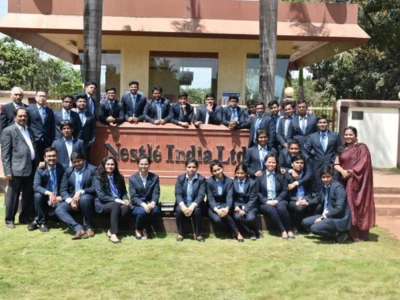
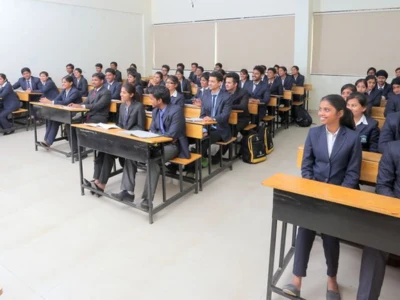
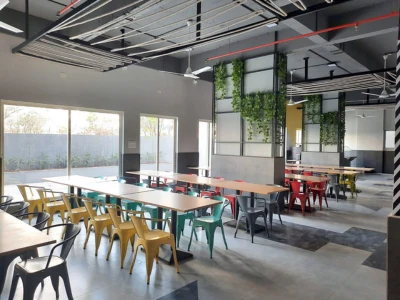
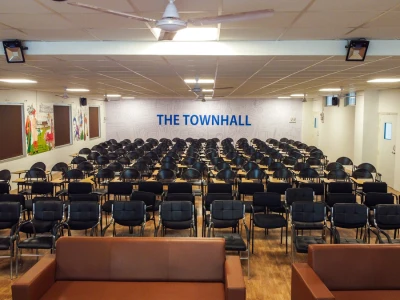
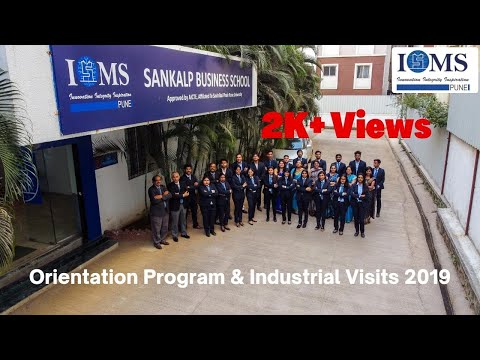
The ISMS campus in Ambegaon Budruk offers academic, residential and activity facilities for full-time management students. Its location provides access to Pune’s education, IT, manufacturing and service-sector environment.
Hostel facilities include purified water, Wi-Fi, wardens, a reading room, mess, laundry and regular sanitisation. Hostel charges are separate from academic programme fees.





Career Outcomes
ISMS programmes prepare graduates for entry-level and early-management roles across sales, finance, HR, analytics, operations, consulting and international business. The role available to an individual depends on specialisation, prior profile, internship performance and recruiter criteria.
The programme supports employability, but applicants seeking highly specialised investment-banking, strategy-consulting or senior analytics roles will need stronger prior credentials and additional technical preparation.
Recruiters
The recruiter mix covers banking, consulting, IT services, e-commerce, retail, financial services and consumer businesses. Recruiter participation can differ by placement cycle, programme and specialisation.
The presence of a company in the recruiter pool does not mean it hires from every programme or returns in every cycle.
International School of Management Studies ISMS Pune vs Similar Colleges
ISMS Pune, Lexicon MILE and PIBM serve a similar applicant group seeking private, full-time PGDM programmes in Pune. The main differences are total fees, international exposure, placement scale and the intensity of corporate training.
ISMS Pune vs Lexicon MILE Pune
The ISMS PGDM fee and placement figures follow its current programme and placement pages. Lexicon’s current 2026–28 fee is INR 10.80 Lakh, with published placement figures showing an INR 9 LPA average and INR 22 LPA domestic highest package.
Choose ISMS Pune when a lower starting fee, an international tour or a UK immersion option has greater value. Choose Lexicon MILE when a broader corporate network and higher published domestic package ceiling justify the additional investment.
ISMS Pune vs Pune Institute of Business Management
PIBM’s academic fee is calculated from its current INR 50,000 registration fee and two annual tuition payments of INR 4,47,500. Its reported 2025 PGDM placement figures include an INR 10.30 LPA average and INR 26 LPA highest package.
Choose ISMS Pune when international exposure, a smaller fee band and multiple management pathways matter more. Choose PIBM when intensive placement training, dual internships and a larger published corporate network are the main priorities.
Is International School of Management Studies ISMS Pune the Right Fit in 2026?
ISMS Pune is positioned as a career-focused private management institute rather than an elite entrance-score-driven business school. Its strongest value lies in the INR 7.35 Lakh PGP MBA, the industry-oriented PGDM and the option to progress to a UK university through international pathways.
The current INR 8 LPA average package creates a reasonable fee-to-placement equation for domestic programmes, but the outcome still depends on communication, attendance, internship performance and role flexibility. International programmes require a much larger total budget because UK tuition and living expenses are separate.
Who Should Consider International School of Management Studies?
ISMS Pune is more suitable for practical, placement-focused management profiles.
- Graduates with a valid management-test score who may not have an elite CAT percentile.
- Applicants seeking an MBA or PGDM within an INR 7–11 Lakh domestic fee band.
- Learners interested in marketing, finance, HR, analytics or operations roles.
- Candidates who value internships, corporate training, certifications and interview preparation.
- Students considering a structured Pune-to-UK management or sports-business pathway.
Who May Prefer Other Colleges?
Other institutes may fit better when the applicant has different academic or career priorities.
- Candidates targeting IIM-level peer groups, research depth or elite consulting recruitment.
- Learners unable to maintain the mandatory 90% attendance requirement.
- Applicants needing a fully online, weekend or working-professional programme.
- Students unwilling to accept sales, relationship-management or entry-level operational roles.
- International-programme applicants without sufficient funds for GBP tuition and UK living costs.
ISMS Pune is worth considering when the selected programme, specialisation and realistic placement expectation justify the complete academic and living-cost investment.
Alumni
The alumni base reflects practical business placements more than celebrity-brand visibility, which is useful for realistic career mapping. Graduates are shown in roles across Axis Bank, BNY Mellon, Flex, KPMG, ICICI Bank, and other firms, with profiles such as relationship manager, HR, and financial analyst. That pattern generally signals employability in mainstream corporate functions. Alumni support also includes mentorship, career guidance, and continued corporate connection. For students who value working-role examples over famous names, this alumni profile is more relevant than flashy.
FAQs
Q: What courses are offered by ISMS Pune?
Q: What is the total fee for the PGP MBA at ISMS Pune?
A: The total PGP MBA fee is INR 7.35 Lakh. It includes INR 5.00 Lakh for the first year and INR 2.35 Lakh for the second year.
Q: What is the ISMS Pune PGDM fee?
A: The two-year PGDM costs INR 7.95 Lakh with an international tour. The UK immersion version costs INR 10.45 Lakh.
Q: Which entrance exams are accepted by ISMS Pune?
A: ISMS accepts CAT, MAT, XAT, ATMA, CMAT, GMAT and MH-CET scores for its Indian management programmes. Selection also includes screening and an interview.
Q: Is admission difficult at ISMS Pune?
A: Admission is profile-based and accessible to graduates meeting the 50% eligibility requirement. A valid entrance score, interview performance and document verification remain compulsory.
Q: What is the average package at ISMS Pune?
A: The current placement dashboard reports an average package of INR 8 LPA. This figure is more suitable for ROI planning than the highest package.
Q: Does ISMS Pune provide 100% placement?
A: The current dashboard displays a 100% placement rate, while programme documents link placement assistance to attendance and academic performance. It should not be treated as an unconditional job guarantee.
Q: Does ISMS Pune offer scholarships?
A: Yes. Scholarship consideration includes a merit route for applicants with at least 70% throughout graduation and another route linked to continuous programme performance.
Q: Does ISMS Pune provide hostel facilities?
A: Yes. Hostel facilities include Wi-Fi, purified water, a reading room, wardens, mess, laundry and basic medical support. Hostel charges are separate.
Q: Is the ISMS Pune MBA degree valid?
A: The PGP MBA route operates through an AICTE- and DTE-approved institution affiliated with Savitribai Phule Pune University. Programme recognition must be checked according to the exact course selected.
Q: Is attendance strict at ISMS Pune?
A: Yes. The institute’s rules require a minimum of 90% attendance across academic activities. Non-compliance can affect academic standing and placement eligibility.
Q: Is ISMS Pune better than Lexicon MILE?
A: ISMS offers a lower PGDM fee and separate international-tour or UK-immersion options. Lexicon publishes a larger recruiter pool and a higher domestic package ceiling, making the decision dependent on budget and exposure preference.
Rating & Reviews
Rating breakdown
★
★
★
★
★
5
★
★
★
★
★
4
★
★
★
★
★
3
★
★
★
★
★
2
★
★
★
★
★
1

Refer more, Earn more with BoostMyTalent
Earn Up to ₹5000 Per Referral!
Unlock Unlimited Rewards — The More You Refer, the More You Earn!
Nearby Colleges



About this Guide
This guide has been researched and compiled by the BoostMyTalent Research Team. Our team includes education experts and data analysts who review official college disclosures and public data to ensure accuracy for students and parents. Learn more about our Methodology & Data Sources.